Fruition
Biography
Something More
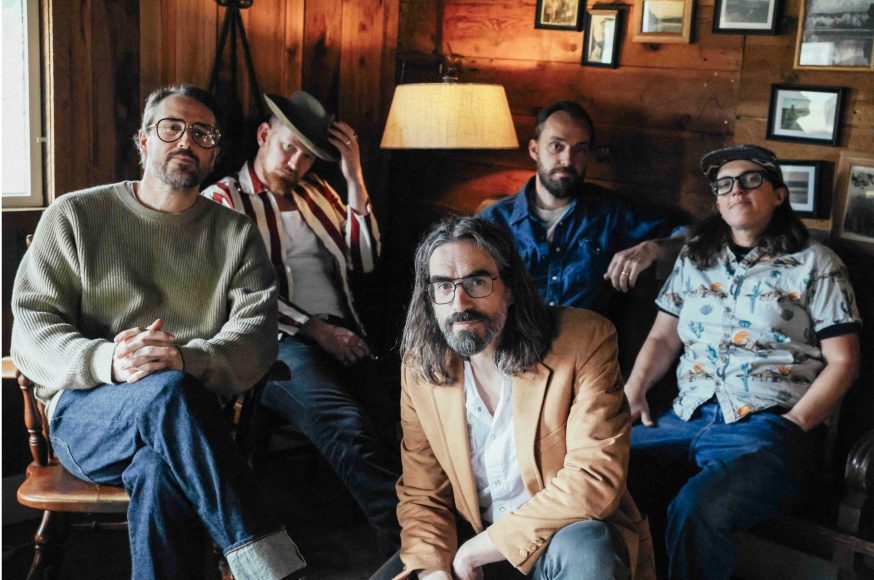
For nearly two decades, Fruition have built their genre-bending version of American roots music around harmony — not just the vocal interplay of the band’s three songwriters, but the deeper harmony created between five friends who’ve spent years on the road together. On their eighth album, Something More, those bonds grow into something more collaborative than ever before.
Produced by Grammy winner Tucker Martine, Something More steps beyond the live-in-the-studio performances of 2024’s How To Make Mistakes. If that overdub-free record nodded to the band’s strength as a live act — to the musical chemistry they’ve been developing since their busking days, when Jay Cobb Anderson, Kellen Asebroek, and Mimi Naja began performing together on Portland street corners — then Something More finds Fruition stepping into an era defined as much by exploration as craft. The recording studio isn’t just a room here; it functions as its own instrument, layering the music with analog tones and atmospheric textures. The result is an indie-influenced Americana record fueled not only by electric guitar, cello, Mellotron, and old-school drum machines, but by the melody-driven songwriting that’s always anchored the band’s sound.
This time around, much of that songwriting took place during collaborative sessions that unfolded everywhere from a lakeside house in Denver to a flower-filled bungalow outside San Diego. There, Fruition’s vocalists teamed up to write songs like “Forward,” “How Does It Feel,” and “By Now,” adding a shared perspective to a band whose previous albums — including 2020’s Wild As The Night, Broken At The Break Of Day, whose lead single “Dawn” became a hit on Americana radio — often threaded three different visions from three different writers. “Writing together is a gentle thing,” says Anderson, who shares frontman duties with his two co-founders. “People can get offended easily, but we’ve known each other for a long time, so it makes it easier to be vulnerable with each other. It’s a sign of maturity.”
Maturity, indeed. Fruition’s melting pot of rock, folk, pop, and soul has never sounded so fully-developed — or so expansive. “Forward” makes room for slide guitar and a dry, deep-pocketed groove inspired by Bahamas, while “All Over” incorporates a vintage drum machine, a finger-plucked chord progression, and dub-inspired reverb influenced by Lee Scratch Perry. For every laidback moment like “Reason To Live” — a rootsy love song, its gorgeous melody punctuated by harmonica — there’s an anthemic counterbalance like “I’m Not Afraid,” whose indie-rock guitar figures and all-hands-on-deck refrains unwind like tailor-made moments for the band’s live show. The title track even turns to gospel music for inspiration, mixing triple-stacked vocal harmonies with live-tracked piano. Tying everything together are autobiographical lyrics that tackle uncertainty, acceptance, and the band’s long journey from past to present.
“As songwriters, we’re always writing about the lessons that life is forcing us to learn,” Asebroek explains. “We’re aging, we’re maturing, so the lessons become heavier and more crystallized. These songs are about reflection, and acknowledging that the future is unwritten — and being at peace with that.”
Those lessons go beyond the music itself. “We’ve always been known as a harmony-driven band,” Asebroek adds, “but that harmony goes beyond our vocals. We’ve gained an understanding of the ways harmony can work between five different souls, and we’ve learned to operate harmoniously despite our differences. Harmony doesn’t really work without dissonance and friction. The whole idea of tension and release in music is so emblematic of the world around us, so the lessons we’ve learned in the band are lessons that apply to our individual lives, too. We’re living in harmony with each other and the world at large, and I feel lucky to experience that with this group of people.”
For Naja, Something More builds upon the momentum — and the themes — that its predecessor made. “How to Make Mistakes was about learning lessons, making mistakes, and leaning into who we are as a band,” she says. “This new album feels like a progression from that era. The lessons are realized and we’re growing from them. It feels like we’re saying, ‘We went through this experience, and here’s an evolved, more mature version of who we’ve become.'”
Years earlier, Fruition had tapped Tucker Martine to produce 2018’s Watching It All Apart. They rekindled that partnership for Something More, capturing the album’s 11 songs during a seven-day session at Martine’s studio, Flora Recording and Playback. There, surrounded by analog gear, they allowed themselves to chase down a new level of creativity in the recording studio. A vintage Ace Tone organ from the early 1960s made its way onto every track, with all five bandmates — including bassist Jeff Leonard and drummer Tyler Thompson — playing the instrument at various points. Pedal steel guitar was woven through the laidback folk-rock single “Oh Well.” Horns were added to the upbeat “Somewhere Down The Line,” while cello, acoustic guitar, and cinematic percussion helped steer the soft-hued opening track, “Compass.” Martine’s collection of musical equipment became a launchpad for the band, encouraging them to dress up their songs with arrangements that were every bit as eclectic as the writing itself. “We walked in there like kids in a candy shop,” says Naja. “We were drawn to all of Tucker’s weird gear. We couldn’t have made an album like this — an album about growth, evolution, and maturity — without that enthusiasm, that space, and that guy.”
Fruition’s journey has been a wild one. They’ve grown their career the old-school way: night by night and song by song, unafraid to roll up their sleeves and do the work, making their way from the street corners of the Pacific Northwest to bucket-list stages like Red Rocks and San Francisco’s Great American Music Hall. Something More feels like the next chapter: a collection of lessons absorbed, trust deepened, and a band fully embracing what they’ve become.
“If anything,” says Anderson, “this record is us trusting each other more than we ever have — as humans and as musicians. It’s the sound of us leaning into each other.”
And within that trust, Fruition discovered exactly what the album’s title promises: something more.