Lucinda Williams Delivers Urgent Commentary & Plea For Action On ‘World’s Gone Wrong’ (ALBUM REVIEW)
[Glide]
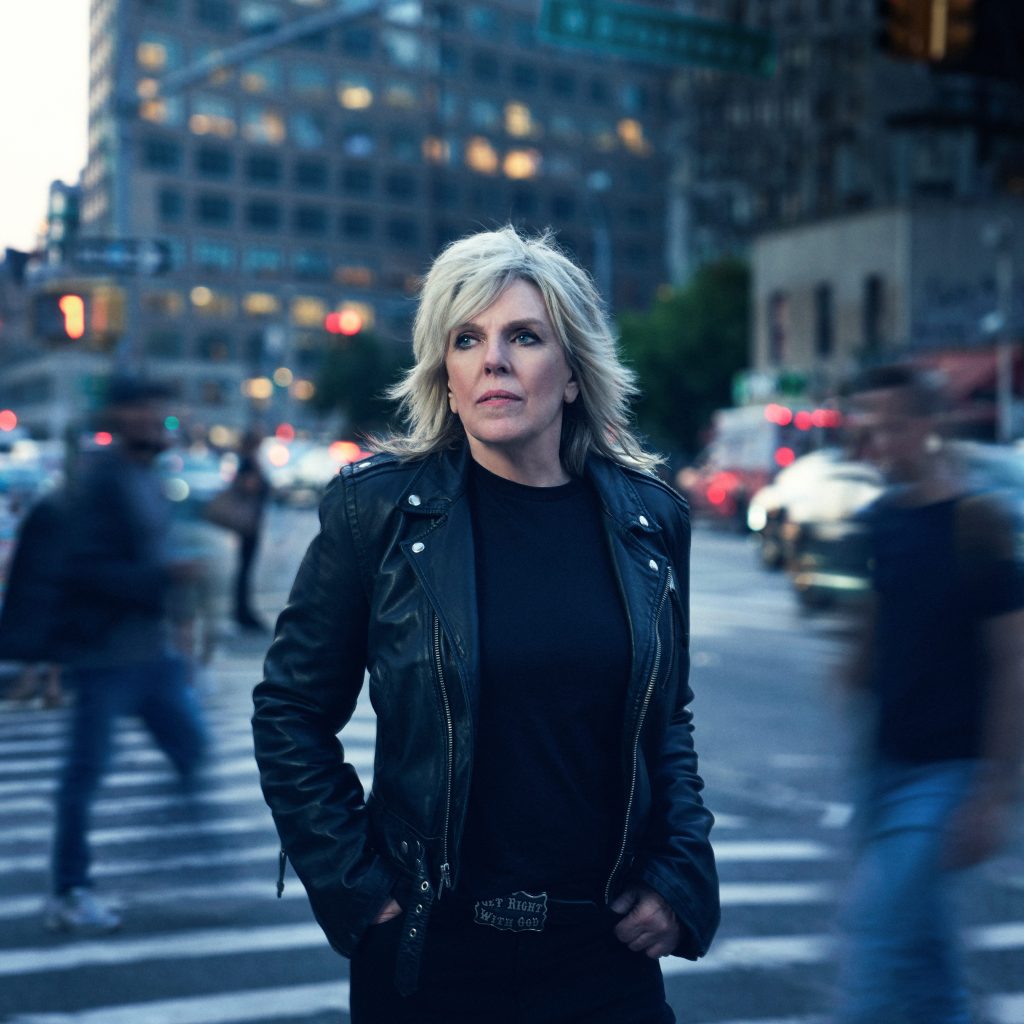
Inevitably, two camps will form over Lucinda Williams’ latest, World’s Gone Wrong. Some will praise her for taking on America’s socio-political crises head-on. The ‘shut up and play” crowd, on the other hand, will argue that we didn’t need Lucinda Williams to inform us of how chaotic things are. Yet, neither camp can deny that Lucinda Williams has always been fearless, unflinchingly honest, and never reluctant to speak her mind, no matter the subject. She says, “I want this record to make people aware, wake them up. I like to push people’s buttons.”
What’s striking about the new record is that many of the songs have lyrics that would fit the Civil Rights movement of the ‘60s, especially “We’ve Come Too Far to Turn Aound.” That song features Nora Jones on piano and harmony vocals and is one that has its roots in Negro spirituals, or could have easily been penned by Pops Staples. Yet, while that tune, “Freedom Speaks,” and to a lesser extent “Something’s Gotta Give,” would easily fit in that protest era, the album itself is far from retro sonically. They weren’t rocking as hard then. Williams enlists the twin guitars of longtime collaborator Doug Pettibone and Marc Ford to give her tunes a scorching punch. Another frequent colleague, Stuart Mathis,joins these two on the last track. The album breathes as much fire, both lyrically and instrumentally, as any in her storied catalog.https://www.youtube.com/embed/T6c8oLWr9kI?si=R3lM6jKjdOwcSyz6
The crunchy opening title track, featuring Brittney Spencer, speaks to the now-ubiquitous phrase ‘affordability’ without using that term. Williams essays the plight of the working class while urging resiliency in the line “Come on baby, we gotta stay strong.” The incendiary twin guitar interplay is prevalent on “Something’s Gotta Give,” also with Spencer, as Williams sings – “There’s an anger to these days/A simmering rage/That never goes away.”
Williams seeks relief from the chaos in the downhome blues of “Low Life,” imbued by Mickey Raphael’s lyrical harmonica. There are three other distinctly blues songs. The rocking “Sing Unburied Sing” is inspired by Jesmyn Ward’s 2017 award-winning novel of the haunted South, a subject Williams knows as well as any. Background vocalists Maureen Murphy and Siobhan Kennedy contribute harmonies. “Black Tears” is the quintessential 12-bar blues, punctuated by Reese Wynans’ B3 and searing duel guitars. Pettibone wields a resonator in “Punchline,” a condemnation of the manipulators and those who operate through fear, who teach hate.
The blues take on shades of punk in the rant against blindly loyal politicians in “How Much Did You Get for Your Soul?,” a sequel of sorts to her “Man Without a Soul’ from Good Souls Better Angels, another raw, rocking, socially conscious effort.Williams invokes Biblical scripture to amplify her case. The sole cover song on the album is Bob Marley’s “So Much Trouble in the World,” where Williams comes full circle by inviting Civil Rights icon Mavis Staples to sing with her. Yet, the standout track, a song that should stand the test of time, is the somewhat derivative closer, the hymn-like “We’ve Come Too Far to Turn Around.” Nora Jones’ contributions are subtle but add a level of sweetness that takes the edge off, while urging us to stay the course – “We are weary of these trials/Of tribulations, we are tired/But we have come too far to turn around.” In fact, the phrase “We won’t turn around” is indelibly linked to the Civil Rights movement. We’ve long heard, “Ain’t nobody going to turn us around, we’re going to keep on walking, keep on talking, marching up to freedom’s land.” Arguably, too many are in the same place, sixty years later.