Brothers Won’t Break: The Cribs Interviewed
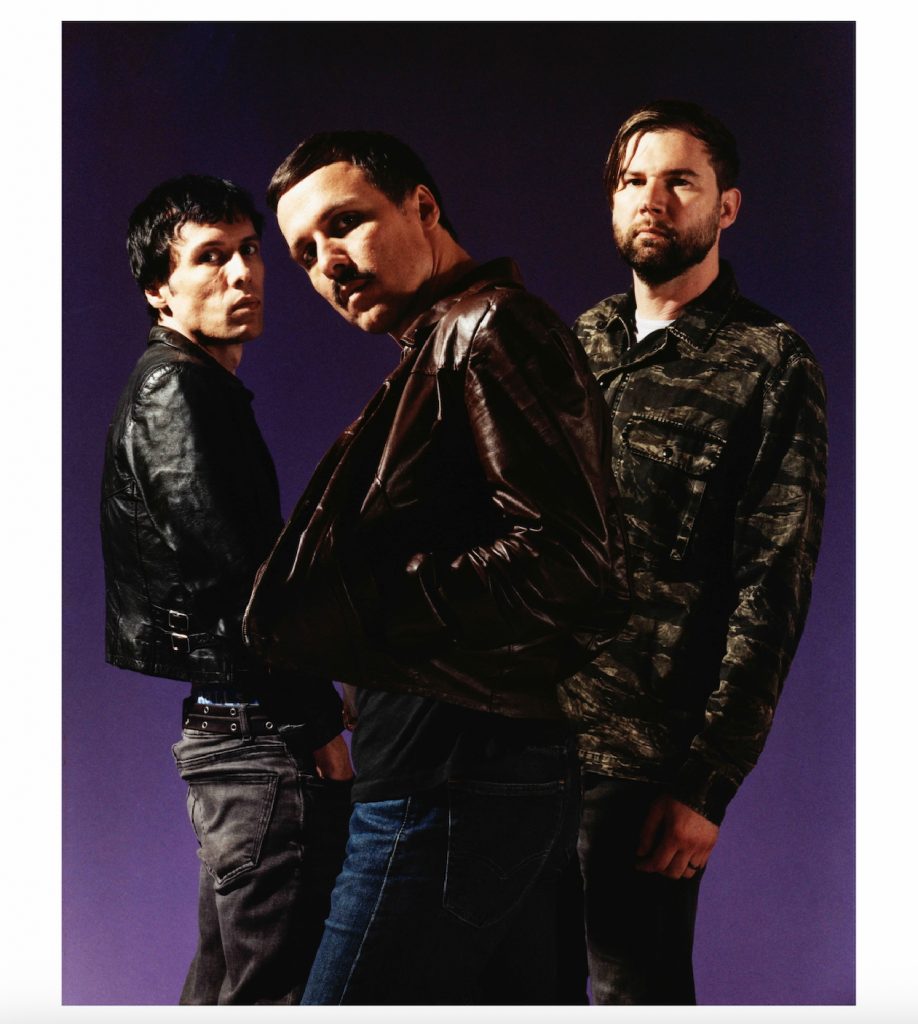
[Clash]
The band break new ground on an excellent, often revealing, new album…
For the Jarmans, home is where the heart is. Growing up in Wakefield, the ex-mining city with a sculpture park and a charming reputation for world-class forced rhubarb, the three brothers manufactured a distinct anti-establishment strain of indie that they set free from their Yorkshire garage in 2001, and have never looked back since. With two now scattered across the US and one still rooted in their beloved hometown, The Cribs’ circumstances may have changed, but the dynamic remains as tangible as ever. “We still celebrate Bonfire Night together at our parents” muses drummer Ross.
It’s been five years since The Cribs released an album, and after a long stint cranking the gears of the write-record-tour machine, their momentum was running low. “The last record came out during the pandemic, so that was more of a remote kind of experience” notes bassist and singer Gary. “Because of that locked-up experience, we just weren’t in a rush to make another record, and essentially just waited until we felt like we had the excitement back, and it did take a while after the grind of it to get that excitement. Back in the day, we used to go through cycles, but we don’t have to do things like that now – just in the interest of making sure that the records mean something to us, and hopefully mean something to the people who listen to them. That’s why we were so fucked up in the 2000s ultimately because it’s hard to maintain a solid grasp on reality when your life is oriented around something that’s so intense and exciting”.
Guitarist Ryan adds, “Once you’ve done a record, it’s not like you’re desperate to do another, you know? So for us it’s more a case of: if we’re going to do another record, we have to feel like it really adds something to us, or we have to feel like it’s significant. Otherwise there’d just be no point. You can’t really fake it – it’d be horrible to promote a record that you didn’t actually have belief in. Particularly on this record, it genuinely feels like this is a new phase of the band, which is exciting.”
Despite this, picking up their picks and sticks again after time off didn’t come without cold feet. “It’s a weird mixture of feelings” Ryan considers, “like a combination of relief and also anxiety, and those things are like oil and water really. It’s a confusing feeling that’s ultimately satisfying. The writing phase was really quick to start off with, but the recording phase went on. We all got together in New York and did it in 12 days. We recorded in the way that we always do, but the production of it went on for ages and ages and ages. I’m relieved it’s all done and dusted and we’re happy with it, but it’s also coupled with knowing that the ball’s gonna start rolling again – you get used to being at home and life outside the band, and there’s always a feeling of trepidatiousness about that”.
‘Selling A Vibe’, an album that inches their discography into the double digits, lands on January 9th, and has been described as an unapologetic celebration of family. Exploring more vulnerable themes in comparison to their scathing takedowns of the Noughties’ most prevalent egotists, classism and navigating the fickle industry as a Northern working class band, ‘Selling A Vibe’ delves deeper, confronting the buried, ugly feelings that have been suppressed over the years.
“It’s funny because us guys know each other better than anyone else. I always know when listening to Ry’s song, I know what it’s about even though he never tells me,” Gary shares. “We always try to make sure stuff isn’t too on the nose,” Ryan adds, “I always get the impression that we all know what the song is about but we don’t talk about it because certain things are revealing or uncomfortable. We were guarded in the past, and now it just doesn’t make sense anymore. It makes you feel exposed, and that’s what I get a kick out of now; I feel like you have to develop to become more honest about stuff”.
On this newfound clarity, Gary observes “It’s a different art form. I think there’s a lot to be said for realism and diaristic writing, and there’s a lot to be said for poetic and more esoteric stuff. We’ve tried exploring it all, but this time, I wanted to be unfiltered and honest rather than blunt. Ultimately, that’s why we still do this, because of our relationship. That’s something that has sustained us on a personal level, but I also think people who like The Cribs are probably interested in who we are in terms of our relationship as a family and hopefully they can relate to those feelings”.
The theme surfaces in the album’s closing track, Brothers Won’t Break, a triumphant ode to sibling solidarity that has kept them afloat amid indie bands that have long since sunk. It’s a tribute to wading through the more tumultuous times they’ve had on the road over the last two decades, which also played a hand in their brief hiatus, with Ryan pointing out that ‘in the beginning we were brothers who had a band. And I think we realised we’d become a band that happened to be brothers’. The tricky and inevitable crossover of the work-life balance became hard to bear, with Gary adding that “The lines are so blurred”.
Ryan recalls, “It’s more compartmentalised now than it was, but you never want for the only time you see each other to be on tour or talking about band-related business. There’s something sad about that. On the flip side, we just came back from the US tour, and that felt really… fun. We actually enjoyed it, and it felt like we were just brothers hanging out and being brothers and then we’d do a show every night. We all have our separate lives now and it’s healthier in that way because doing this is all-consuming for us”.
“It’s like that Ken Barlow thing,” Gary chimes in, “He’s been Ken Barlow for 50 years, and he does it like five days a week. How does he stop being Ken Barlow? For the first 20 years of our lives, we were the Jarman brothers, and then ever since, we’ve been The Cribs. Which is weird, because it’s not even our name. We should have really thought about that”.
Ryan nods with a smile, “The band should have always been called The Jarmans!”
The tracklist brims with soon-to-be classics like ‘A Point Too Hard To Make’ and ‘Never The Same’, carved from The Cribs’ unerring gift for hook-laden choruses, whilst the pop-infused lead single ‘Summer Seizures’ and the softer, twinkling ‘Distractions’ proves their knack for delivering fresh, exciting sounds with each release. Beneath it all, the enduring Jarman DNA anchors the work, a reminder of why they remain one of Britain’s most loved and resilient bands.
“I think with us all being brothers and having had the same influences growing up from the same records, there’s a certain part of our sound that no matter how much we push it and how off piste we try and go, won’t change,” Ryan nods.
Band mate Gary adds: “Hopefully its developed and diversified over the years but it’s not like we’ve ever tried tearing it down and reinventing it necessarily – there’s a through line where we were excited by the same things we always were, usually that’s hooks and sentiment. For this record, influence wise, we’ve broadened it out a bit; there’s a bit of 90’s R&B on there, a little bit of a soul sound on ‘Brothers Won’t Break’, but that’s not saying that we’ve done a pastiche of any of those things, it’s more adding those elements to our sound. If your band has a personality, and it has a signature kind of personality that people identify with, that’s such a valuable thing to have. It would be silly to try and run away from it. We just embrace it. But we’re always excited by other things!”
After a defining set at All Points East’s indie all-stars edition this summer, where fans old and new were being thrown over the barrier from the get go, it was an opportunity to test out ‘Selling A Vibe’ amongst their cherished anthems. As Gary puts it, having 20 year old songs that still ignite crowds is “a blessing and a curse” – every new album becomes an attempt to beat their own past, “competing against yourself”.
Ryan admits there’s always a fear the new material won’t land. “You don’t want people to go crazy for the old songs and not be as bothered about the new stuff,” he says. But playing ‘Summer Seizures’ live has been unexpectedly affirming: the track slotted into the set “perfectly,” going down “just as good as everything else.” He was also struck by the energy of the recent shows – the pits, the barrier crush, the full-bodied chaos he thought might be “a thing of the past on a societal level. “It brings that out of people,” he smiles.
With album release week approaching, the band are leaning into intimate shows and in-store performances. “Songs in a more up-close environment, that always used to happen anyway once upon a time” Ross reflects. “Album campaigns changed massively from when we first put a record out to what they are now – it’s completely different. People always used to go out and do a tour and get to grips with some of the new songs and figure some stuff out, and then later on in the campaign go out and do it live. It kind of feels like that’s what the in-store shows are about. You go, you help load the record that’s just come out, and you play it to a few hundred people in a small city who get to hear the new stuff first.”
For Gary, being present in those moments is essential. “The week a record comes out, I don’t want to be sat at home,” he says. “You want to be around the people that are buying the record… you get to see the visceral and immediate buzz of releasing a record.” He emphasises the magic of someone buying the album at Rough Trade and then seeing the band perform it that same night – “a communal thing,” he calls it, something that connects the band and their audience in a way nothing else does.
For The Cribs, playing at home has always carried a unique weight. With a hotly anticipated homecoming at Millennium Square in Leeds next July – a decade after their landmark show at the same venue – the brothers are focused on delivering a night that honours their roots. “For us, we’ve always seen it as a way of having a different perspective on the way things seemed when you were growing up,” Ryan explains. “Last time we did Millennium Square, we curated the bill so it wasn’t a case of us just doing a hometown show – we saw it as putting on an event in our hometown, something we would have enjoyed growing up there. We definitely put a lot of thought into it, and it means a lot”.
That thoughtfulness comes with pressure. “When you go back to Leeds now it’s a big deal, so you have to make a big deal out of it,” he says. “You get these conflicting narratives where it’ll be like some people, like your old school fans particularly, they want you to play a small local gig that reminds them of what it was like when they first came to see you, which is cool and everything, but sometimes feels a little bit elitist because people struggle to get tickets for it, so it’s exciting to be able to just open it out and get everyone together. We have to put a lot of thought into our local shows, that’s why they’re a bit rarer”.
“It kind of makes it a special event,” Ryan adds, and as Gary sums up, “There’s a lot of thought and planning that goes into it – but that’s how you make it.”
‘Selling A Vibe’ is out on January 9th, pre-order it here.