Nathaniel Rateliff Talks Newport Folk, Farm Aid, Mavis Staples, and Building Community Through Music (INTERVIEW)
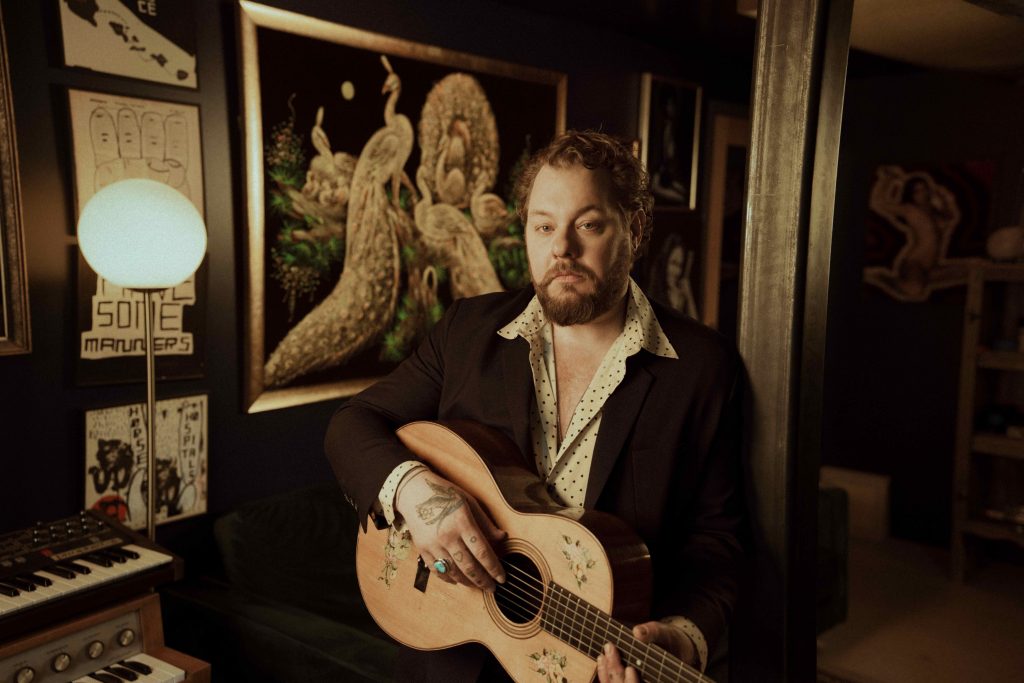
Born in rural Missouri before relocating to Denver, Colorado, singer-songwriter Nathaniel Rateliff built his reputation in the indie-folk scene before achieving widespread stardom by blending fiery vintage rhythm & blues with soul and Americana. Fronting his powerhouse backing band, Nathaniel Rateliff & The Night Sweats, he gained international recognition with the breakout 2015 hit “S.O.B.”, subsequently earning multiple chart-topping Triple A singles, critical acclaim for albums like South of Here, and sold-out arena runs including landmark performances at Madison Square Garden. Recently named the Newport Folk Steward, Rateliff made headlines in July 2026 by hosting a star-studded collaborative set at the Newport Folk Festival featuring Dave Matthews, Joan Baez, and Mavis Staples, as well as continuing a busy schedule of solo and headlining appearances across the festival circuit. Glide Magazine sat down with the troubadour to discuss his impressive involvement with the Newport Folk Festival, Farm Aid, his treasured bond with Mavis Staples, and more.
Welcome back to the Newport Folk Festival. You were appointed as the very first Newport Folk Steward in 2024, and this is not your first time performing at this legendary event. I assume it won’t be your last. It looks like you’re starting to build your own legacy here and beyond with your widespread stewardship, including your own non-profit Marigold.
We started the Marigold Project after one of the Farm Aids. And growing up in rural America, and having a lot of my family still live in rural America, and Missouri, you know, you’re surrounded by agriculture, but there’s no access to food. There’s no food sovereignty; it’s not something that’s talked about. People, if they’re motivated, have gardens – if they have the space and the time. It started as a way of asking, how do we do that in places like Colorado? How do we do that in Missouri? But then it was also like, how do I grow and expand and meet people in communities we were in? And I think that’s really just about community.
Being here, the steward of this festival is to try to connect with the community of artists. This isn’t a competition. We’re all doing the same thing. We’re all creating music, and art, and what we see and experience. That should be reflected in our songs to give people a shared human experience when they listen, in the hopes that people leave changed in some way. You know, it’s like, you get to go to a concert, and you get to meet the person next to you. And who knows what will come out of that relationship?
There’s so much divisiveness in our country. People aren’t open to conversation. It’s just arguments about being right or wrong. I think we should be creating neutral space. I feel like my beliefs are usually backed up by the work I’m doing. In terms of what we do with Marigold, whether that’s helping housing people, or trying to change gun legislation in Colorado, and even bringing gardens or food into urban schools. I just think it’s about people and community, right? You know, and I feel the same when I get to go somewhere else, and I’ve been able to go to another city and can have the opportunity to embrace the culture, and I feel that’s in the music too. I feel like it’s another way of bringing people together.
What do you want your audience to walk away with at the end of your shows?
I try to be entertaining. Compared to normal years, I’m not really on a long-term tour. My wife and I got married at the end of last year; we also welcomed a son, and I had a pretty invasive cervical disc replacement surgery on my neck. And so this year, even though I’m working a lot, it seems like a fraction of what I would normally do. So, I get to do these shows just by myself lately. And part of it is, you know, I’m trying to figure out how to make what I’m doing entertaining while being just true to myself. So, part of that is like now, I think people know me. And it’s interesting in our culture how much people want to know about musicians or celebrities, or however you want to say that, I guess. So, I try to share, in a way, that I don’t think I would on, like, social media, because I’m 47, I suck at social media. I feel like when I’m in front of people, I just talk to them as my true self. I feel like a lot of what I’m writing about is my own true experiences. I think it’s important to not feel alone in our journeys as humans, you know? We’re all going through the same things a lot of times. I also want people to have fun, you know? I usually make people laugh, not that I’m a comedian.
Regarding the Felice Bros tribute album, Felice County Fair: A Celebration of the Felice Brothers? Your cover of “Aerosol Ball” is excellent. How did you come about choosing that song?
It was just the one that really resonated with me. Um, I did a version of “Frankie’s Gun” as well. That was another one out of their catalog that I just love. It was a fun thing to do, and it kind of came out of nowhere. I’m friends with those guys and connected with them through Wes and Brandy Schultz. Brandy suggested that I should do a Felice Brothers’ song. I was like, okay. I was like, who’s done what? And then I just started digging in.
You’ll soon be performing songs by Leonard Cohen, Harry Nilsson, along with your own tunes with the Colorado Symphony at Red Rocks. How did you land on performing songs by Cohen and Nilsson? Is this your first with an orchestra?
The Colorado Symphony has a program, Imagination Artists. And the first thing I did was the 50th anniversary of Harry Nilsson’s “A Little Touch of Schmilsson in the Night”, which is one of my favorites, but maybe a deep cut for some people. It’s, like, a lot of standards. And then the following year, I did Leonard Cohen songs. He’s always been a huge influence on my writing. And I kind of focused on his first five or six albums of material. I primarily did those shows in Denver, and then the third year, I did a lot of my stuff from my earlier catalog, a lot of my folky singer/songwriter stuff.
Then you’ll squeeze in a stop in Virginia for Willie Nelson’s Farm Aid. You’ve been involved with Farm Aid for years, and you are now on their board. Can you share your thoughts on being a veteran performer at Farm Aid and now being quite involved with its mission and the concert?
Oh, man. Yeah, Willie Nelson is a national treasure. Farm Aid is so important but still has a limited reach in trying to get our message across. Ultimately, we need to overhaul the whole farming system in terms of our food, agriculture, and even water. But our system isn’t set up to conserve. I think we’re trying to make people aware of what small family farms are going through.
Farm Aid has been going on for 40 years, and it’s sad; every year it’s the same thing – people are still losing their farms. There are so many people who are fighting local legislation about the state of farming and the practices of large corporations like Monsanto. There’s a huge influence from large corporations to do factory farming and eat up all the land that we have. And it’s not like we’re making more of it. Instead of replenishing it, we’re consistently stripping the soil of its nutrients, and at some point, we’ll be left with soil that’s worthless.
In my first year there, I met Roger Allison and Rhonda Perry, who founded Patchwork Family Farms and the Missouri Rural Crisis Center. They have been to every Farm Aid since the beginning. Roger drove his tractor to the White House lawn. There were hundreds of farmers who drove across the country during the Reagan administration. Their organization was only like an hour away from where I grew up. And so every year, I feel like I go there and we try to educate people, but I also feel like I get educated on what’s happening.
You’re performing again with Mavis Staples at Santa Fe Opera in New Mexico in September. You have a great relationship with her.
Mavis and I kept running into each other. We’d sing with each other here and there over the last ten years. And then I just started to make it a point to say hi to her, and we’ve become really good friends, and I cherish our relationship and our phone calls. She’s just, you know, one of the most powerful singers alive
Well, you mentioned Willy being a national treasure. So too is Mavis.
Yeah, yeah absolutely. And, you know, Mavis and Willie, they just have like, they’re so full of stories. It just needs a hungry ear, and they’re willing to share.
In October, you’ll be performing in Chicago for the John Prine tribute, Souvenirs. What did John and his music mean to you and what is your involvement with the show?
For years, people would be like, do you listen to John Prine? It just wasn’t the thing for me. My mom or dad didn’t listen to much of John Prine’s stuff. I found John’s stuff a little later, and it was one of those things when, as soon as I heard him, I was like, how have I missed this? I just loved his songwriting. I love his phrasing. He has his own way of using vernacular that’s really amazing. And then I was lucky enough to become friends with Fiona and John and the family. I first met John at Red Rocks, which is right by where I lived. I had been texting with Fiona, and she was like, come back, you know, after the show. He was just so hospitable and kind. I just don’t think we’ll see anyone like that again. Some people are blessed or touched, and John was definitely one of those guys.
So, let’s get back to you. You’re working on a new solo album. When do you plan to release it?
Some time early next year.
What are some songs that you’re excited about playing on tour?
Oh, there’s a bunch. I don’t know if I want to give away any secrets yet, so we’ll keep it there. Thanks, Marc!